
EJEC’s Eisuke Otsu Speaks at Thailand Road Tunnel Technical Seminar
2026.10.7
On Monday, September 14, 2026, the 2nd Technical Seminar on Road Tunnel was held at the Platinum Hall of Avani Ratchada Bangkok Hotel in Bangkok, Thailand. The seminar provided an opportunity for Thai and Japanese stakeholders to share expertise on construction technology, quality control, and safety management for mountain tunnels.
Eisuke Otsu of Eight-Japan Engineering Consultants Inc. (EJEC) participated as a member of the JICA Expert Team and delivered a presentation entitled, “Design for Constructability: Technical Problem-Solving and Construction Management”.
- Date
- Monday, September 14, 2026
- Time
- 10:00–16:30 (Thailand Time)
- Venue
- Platinum Hall, Avani Ratchada Bangkok Hotel, Bangkok, Thailand
- Seminar
- 2nd Technical Seminar on Road Tunnel
- Theme
- Construction Technology, Quality Control, and Safety Management for Mountain Tunnels
Purpose of the Seminar
The seminar addressed technical issues across the full life cycle of mountain tunnels, from planning and design through construction and maintenance, and shared practical knowledge for ensuring quality and safety. Presentations covered Thailand’s experience in mountain tunneling and geotechnical risk management, together with approaches developed through Japanese investigation, design, and construction practice.
In the afternoon session, Professor Nobuharu Isago of Tokyo Metropolitan University, Mr. Otsu of EJEC, and Mr. Masashi Nakaya of Hazama Ando Corporation each delivered a presentation on advances in tunnel technology, design for constructability, and advanced construction technologies and safety measures.
Program (September 14, 2026)
The seminar was organized in morning and afternoon sessions featuring Thai and Japanese specialists. Mr. Otsu spoke in the fifth session, explaining how design for constructability can anticipate and manage construction-stage issues from the design stage.
| Time | Program |
|---|---|
| 10:00–10:10 | Opening Remarks |
| 10:10–11:00 | Overview of Mountain Tunneling in Thailand: Construction Experiences and Lessons Learned Professor Noppadol Phien-wej, Asian Institute of Technology (AIT) |
| 11:00–11:10 | Coffee Break |
| 11:10–12:00 | Geotechnical Risk Mitigation and Safety Management for Mountain Tunnels in Thailand Associate Professor Suttisak Soralump, Kasetsart University |
| 12:00–13:00 | Lunch |
| 13:00–14:10 | Recent Advancements and Technical Standards in Mountain Tunneling Professor Nobuharu Isago, Tokyo Metropolitan University |
| 14:10–14:20 | Coffee Break |
| 14:20–15:20 | Design for Constructability: Technical Problem-Solving and Construction Management Eisuke Otsu, Eight-Japan Engineering Consultants Inc. |
| 15:20–16:20 | Advanced Construction Technologies and Safety Measures in Mountain Tunneling Masashi Nakaya, Hazama Ando Corporation |
| 16:20–16:30 | Closing Remarks, Presentation of Token of Appreciation, and Commemorative Photograph |
EJEC's Contribution
Mr. Otsu defined constructability in mountain tunneling as more than simply making construction easier. He described it as a design capability that anticipates uncertainty in ground conditions and enables appropriate management and response during construction. His presentation emphasized the importance of connecting site investigation, design, construction planning, field implementation, and feedback as one continuous process.
Presentation title
“Design for Constructability: Technical Problem-Solving and Construction Management”
Key topics
- Early identification of ground risks at the design stage to prevent rework during construction.
- Incorporation of advance technical measures for critical risks involving tunnel faces, portals, groundwater, and fault zones.
- Reliable transfer of design intent, support patterns, excavation sequences, and decision criteria into construction planning.
- Observational construction and prompt decision-making based on displacement monitoring, face observations, and probe drilling.
- Application of Japanese lessons to Thailand’s limestone karst terrain, heavy rainfall, groundwater, and complex fault zones.
The presentation explained how design documents can be developed not as static deliverables, but as practical action rules for decision-making during construction. By clearly documenting key design assumptions—such as anticipated ground classes, allowable displacement, and water inflow—and by defining responses for predetermined threshold levels, project teams can improve construction safety, quality, and schedule stability.
Japanese case studies were also introduced, including early identification of landslide risks and optimization of tunnel alignment and structural design to protect groundwater. These examples demonstrated how risk reduction during design can avoid extensive redesign and additional countermeasures during construction.
Seminar Highlights
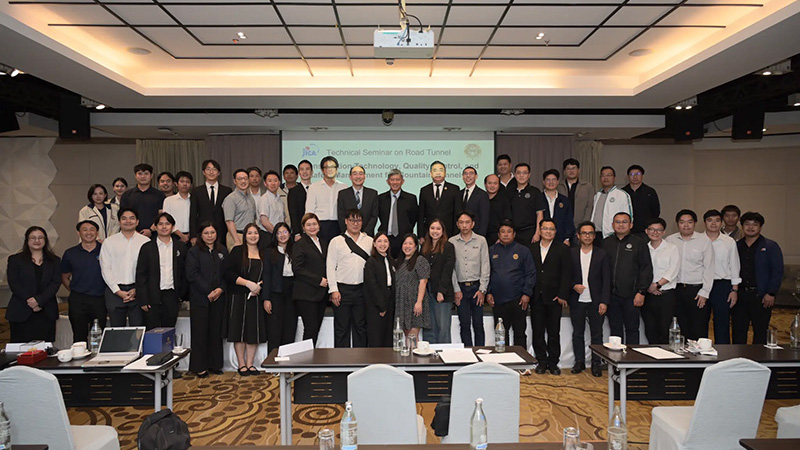
The seminar brought together stakeholders involved in tunnel engineering to exchange knowledge on construction technology, quality control, and safety management for mountain tunnels. A presentation of tokens of appreciation and commemorative photographs followed the presentations.
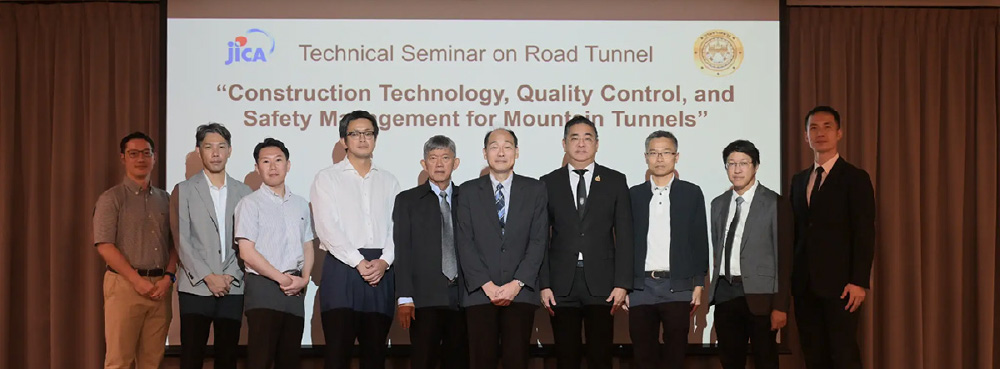
Commemorative photograph of the seminar speakers
Commemorative photograph of the seminar speakers
-

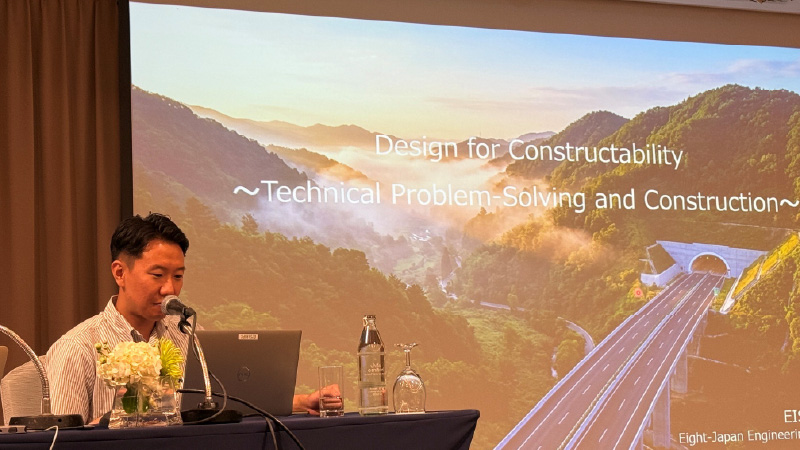
Mr. Otsu delivering his presentation
Mr. Otsu delivering his presentation
-
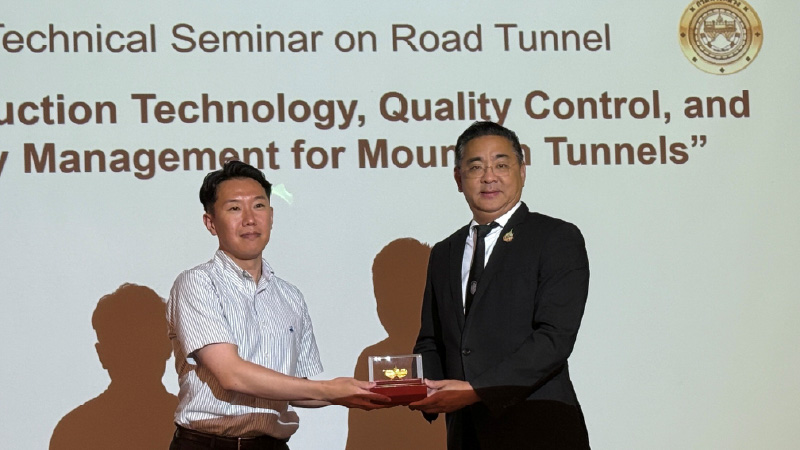
Presentation of a token of appreciation
Presentation of a token of appreciation
-
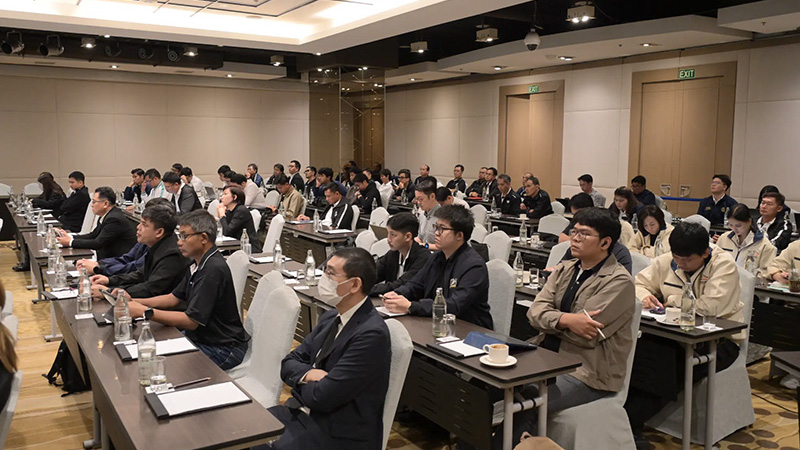
Participants at the seminar venue
Participants at the seminar venue
-
Commemorative photograph of participants
Commemorative photograph of participants
The seminar offered a valuable opportunity to share Japanese knowledge in investigation, design, and construction with stakeholders involved in mountain tunnel development in Thailand. EJEC will continue contributing to safe and sustainable infrastructure development overseas through its integrated technical capabilities, from planning, investigation, and design to construction management.

 Eight-Japan Engineering Consultants Inc.
- All News
- Transportation & Road Infrastructure
- EJEC’s Eisuke Otsu Speaks at Thailand Road Tunnel Technical Seminar

 Eight-Japan Engineering Consultants Inc.